Where to Find eSIM Data Plans with Zero Data Usage in Hong Kong
9/29/2026
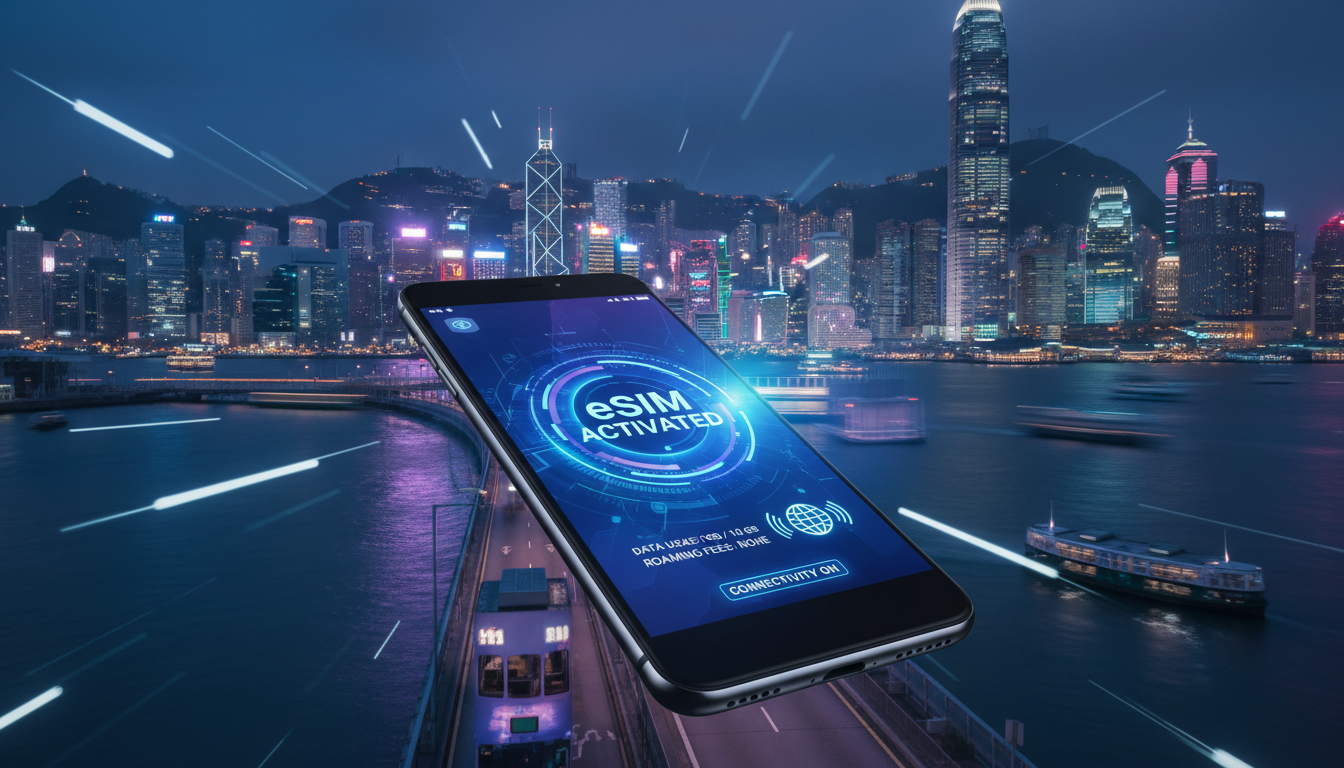
What Does "e SIM Nada Nada" Really Mean?
If you've come across the phrase "e SIM nada nada", you might be wondering if it means using an eSIM with zero data or no physical SIM card at all. The term sounds like casual slang, but it actually points to a growing trend: using an eSIM plan that lets you stay connected without the hassle of swapping physical SIM cards.
In simple terms, "nada nada" hints at "nothing" or "no physical SIM," emphasizing the convenience of eSIM technology.
An eSIM is a digital SIM embedded in your device, allowing you to activate a mobile eSIM service without inserting a physical card. This means no more fumbling with tiny SIM trays or worrying about losing your SIM.
But does it really work seamlessly? And what should you expect when switching to this new tech?
I always start by explaining the activation process and compatibility because those are the first hurdles most people face.
How the eSIM Activation Process Works and Its Benefits
The Activation Process: Step by Step
Activating an eSIM is different from inserting a physical SIM, but it’s straightforward once you know the steps:
- Choose an eSIM provider and plan — Many providers offer global or regional data plans, including some that cover Hong Kong extensively.
- Receive a QR code or activation link — This code is scanned or entered into your phone’s settings.
- Download the eSIM profile — Your device downloads the carrier profile digitally.
- Activate and configure your plan — Once installed, your phone connects to the network just like with a physical SIM.
A common mistake is rushing through activation without checking device compatibility first. Not all phones support eSIMs, and even among those that do, some carriers have restrictions.
For example, certain Android models require specific firmware versions to handle multiple eSIM profiles properly. If you skip this check, you might end up with no service or limited functionality.
Why Choose an eSIM Over a Physical SIM?
The benefits of eSIM technology go beyond convenience:
- Instant switching between carriers without physically changing cards.
- Multiple profiles on one device, useful for managing work and personal numbers.
- No roaming fees when using local eSIM data plans abroad.
- Reduced risk of losing or damaging a physical SIM card.
I’d advise against ignoring these benefits if you travel frequently or want to simplify your mobile setup. For travelers in Hong Kong, for example, choosing a local eSIM provider can save roaming charges while ensuring fast coverage from CSL, 3, or SmarTone networks.
Understanding Mobile eSIM Services and Data Plans
What Is a Mobile eSIM Service?
A mobile eSIM service provides cellular connectivity through downloadable profiles instead of physical cards. These services often offer flexible data plans tailored for travelers or users who want temporary access without contracts.
One such provider is nadanada, which offers global data plans starting from $0.99 for 1 GB valid for 7 days in countries like Australia and Denmark. Their service requires no KYC (Know Your Customer) verification or account creation, allowing payment via Bitcoin, Monero, Apple Pay, and Google Pay.
This kind of service appeals to privacy-conscious users who want quick access without lengthy sign-ups.
The Difference Between an eSIM and a Physical SIM
The key difference lies in form factor and management:
| Feature | Physical SIM | eSIM |
|---|---|---|
| Form | Plastic card inserted into device | Embedded chip inside device |
| Activation | Manual insertion | Digital download via QR code |
| Number of profiles | Usually one per card | Multiple profiles can coexist |
| Switching carriers | Requires swapping cards | Switch via software settings |
| Risk of loss/damage | High | None |
This table clarifies why many users prefer switching to an eSIM: it eliminates the physical limitations of traditional SIM cards.
Choosing the Best eSIM Providers for Hong Kong Travelers
What to Look For in an eSIM Provider
When picking an eSIM provider for Hong Kong or global travel, consider these criteria:
- Coverage quality: Does the provider use reliable local networks like CSL or SmarTone?
- Data plan flexibility: Are there short-term plans (3-7 days) or longer options (15-30 days)?
- Pricing transparency: Are prices clearly stated without hidden fees?
- Activation ease: Is the QR code delivery instant? Is customer support responsive?
- Payment options: Can you pay with credit cards, Apple Pay, or cryptocurrencies?
Recommended Providers Based on My Research
According to MyBestSim’s latest rankings for Hong Kong travelers:
| Provider | MyBestSim Rank | Rating (/5) | Promo Code | Discount |
|---|---|---|---|---|
| Roamic | 1 | 4.9 | MYBESTSIM | 10% off unlimited |
| Yesim | 3 | 4.8 | MYBESTSIM20 | 20% off unlimited |
| LinkeSIM | 7 | 4.3 | MYBESTSIM | 5% off unlimited |
| nadanada | 11 | 4.2 | MYBESTSIM | 15% off unlimited |
For example, nadanada offers affordable data plans starting at $0.99 for 1 GB valid for one week in several countries including Denmark and Australia. Their promo code "MYBESTSIM" grants a 15% discount on unlimited plans—a good deal if you want to test their service while traveling.
Field Observation: Data Plan Duration vs. Usage Needs
A common pitfall is choosing a data plan valid for too short a period relative to your stay duration. For instance, selecting a 3-day plan when traveling for a week leads to repeated purchases and higher costs overall.
Conversely, buying a monthly plan for just two days wastes unused data.
I always recommend matching your plan duration closely with your trip length—this avoids overpaying and ensures continuous connectivity without interruptions.
Using an eSIM Compatible Device: What You Need to Know
Which Devices Support eSIM?
Not every smartphone supports eSIM technology yet. The most common compatible devices include:
- Apple iPhone XS and later models
- Google Pixel 3 and newer
- Samsung Galaxy S20 and newer (select models)
- Some recent iPads and laptops with cellular options
If your device lacks built-in support for multiple profiles or remote provisioning (GSMA specification SGP.22), activating an eSIM can be tricky or impossible.
Practical Tips for Managing Your eSIM Profiles
Managing multiple profiles requires care:
- Always label each profile clearly in your device settings.
- Avoid activating multiple profiles simultaneously on devices that don’t support dual active SIMs; this can cause network conflicts.
- When switching profiles, wait until the phone confirms connection before disabling another profile—rushing this step may cause temporary loss of service.
The GSMA specification SGP.22 governs remote provisioning of eSIMs, ensuring interoperability between devices and carriers worldwide. Familiarity with this standard helps understand why some providers offer seamless activation while others require manual steps.
How Using an eSIM Changes Your Phone Experience
Switching from a physical SIM to an eSIM changes how you interact with your phone’s connectivity:
- You no longer need to open your phone’s SIM tray—a relief if your device has tight seals for water resistance.
- You can store multiple carrier profiles digitally but must manage them carefully to avoid confusion.
- When traveling internationally, you can buy local data plans instantly without hunting down physical stores.
However, I’d advise against assuming all carriers support full functionality on every device model—some network features like VoLTE might not work immediately after activation due to carrier restrictions.
For travelers heading to Hong Kong specifically, using local providers’ official apps or websites can simplify buying compatible plans that leverage CSL’s or SmarTone’s networks directly. You can find detailed instructions on how to get started with these services at how to get an eSIM in Hong Kong.
Exploring "e SIM nada nada" reveals much more than just slang—it opens up understanding about how modern mobile connectivity works without physical cards. Whether you're simplifying your tech setup or preparing for travel in Hong Kong, knowing how to choose and use an eSIM plan effectively makes all the difference in staying connected hassle-free from airport arrival through Victoria Harbour views.
FAQ
What does 'e SIM nada nada' mean in mobile terms?
'e SIM nada nada' refers to using an eSIM without a physical SIM card, emphasizing the convenience of digital SIM technology that eliminates the need for physical cards while maintaining connectivity.
How do I activate an eSIM on my smartphone?
To activate an eSIM, select a provider and plan, scan the provided QR code or enter an activation link, download the eSIM profile, and configure your plan through your phone’s settings.
What are the main benefits of using an eSIM over a physical SIM?
eSIMs allow instant carrier switching, support multiple profiles on one device, reduce roaming fees with local plans, and eliminate risks of losing or damaging a physical SIM card.
Which devices are compatible with eSIM technology?
Most Apple iPhones from XS onward, Google Pixel 3 and newer, select Samsung Galaxy S20 models, and some recent iPads and laptops support eSIM functionality.
Are there any limitations when using eSIMs with carriers?
Some carriers may restrict features like VoLTE or limit multiple active profiles depending on device compatibility and firmware, so checking carrier support before switching is important.

Emily Wong
Emily is a Hong Kong-based travel writer. At Hong Kong eSIM she compares CSL, 3 and SmarTone plans so visitors stay connected from the airport to Victoria Harbour.